All interested researchers and students are invited to attend. No registration is required for the short course. Seating is limited and is available on a first come, first served basis.
Program
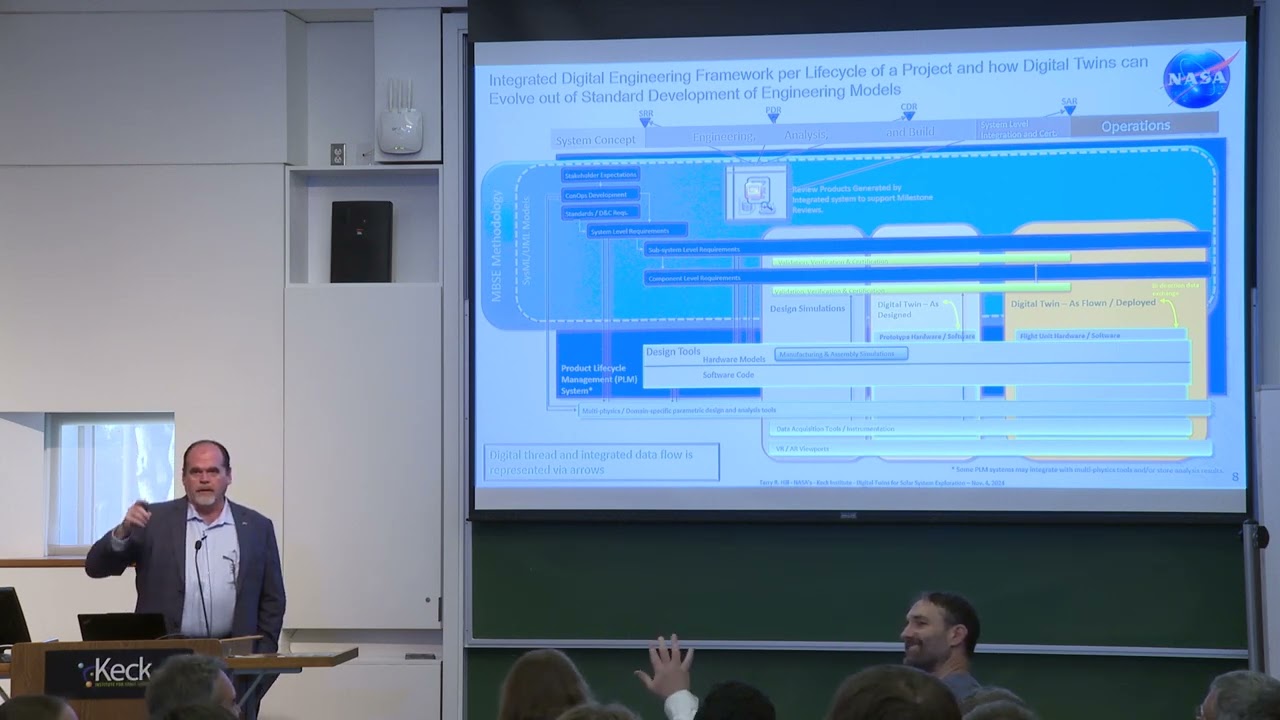
Talk 1 – “End-to-End Example of a Digital Twin” – Terry Hill, NASA Johnson Space Center
- Digital Twin definition, including models versus digital twins
- Digital Twin benefits over models that we should leverage
- End-to-end Digital Twin example
- Lessons learned, bottlenecks, what not to Digital Twin
- Artificial Intelligence/Machine Learning use within the Digital Twin framework
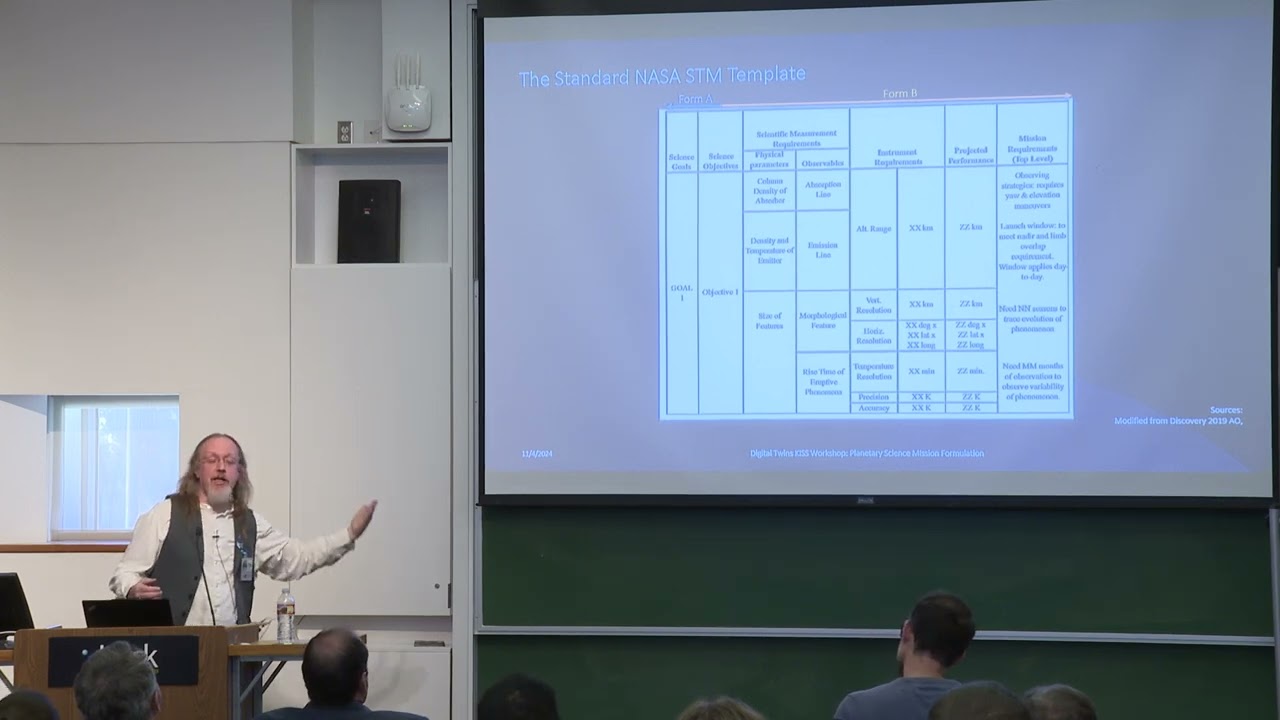
Talk 2 – “Overview of Planetary Mission Formulation” – Karl Mitchell, JPL
- General mission formulation for planetary exploration
- Differences in processes, expectations, and needs for flagship versus competed missions
- Science Traceability Matrix (STM) and Concept of Operations (ConOps) development
- Need and opportunity for digital twins
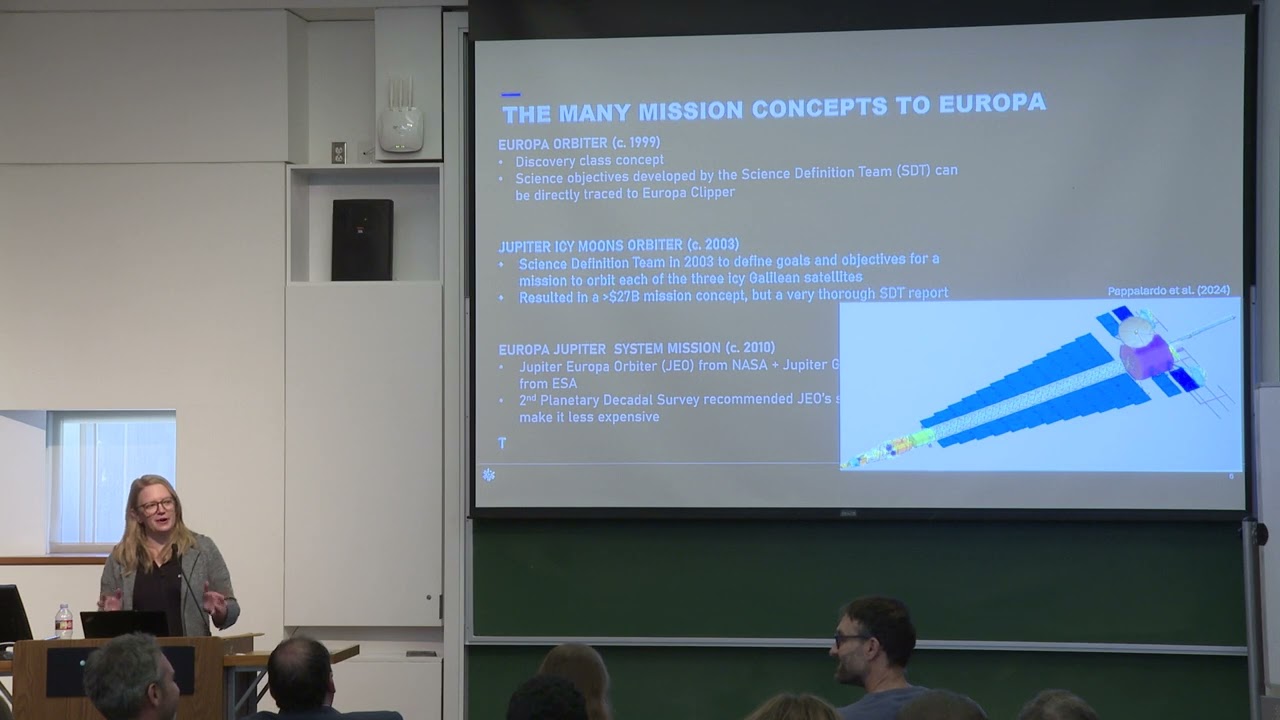
Talk 3 – “Lessons from Europa Clipper” – Erin Leonard, JPL
- Science and instrumentation from mission concept to Phase E
- Team structure and organization for science and mission success
- Science Traceability Matrix (STM) development, evaluation, and science planning (e.g., PSTAF, tour design, SSPG) and the effect on conops and future workflow
- Consideration of a Digital Twin for Europa