Workshop Overview:
Direct imaging of a planet around another star is exceedingly challenging. For even the closest stars observed with the largest ground-based telescopes, the angular separation between star and planet will be near the classical diffraction limit. Moreover, a typical star will be about a billion times brighter than the planet to be imaged, a challenge even for the most stable telescope in space. The planetary image is also buried in “speckle noise,” which is the result of uncorrected wavefront errors that propagate through the atmosphere and even the most accurately polished optical system. This speckle noise has complex properties which are different from planetary signals. While algorithms now exist that exploit some differences between the signal and noise characteristics, there has been little effort to address the full problem in a rigorous and comprehensive way. Our focus on speckle discrimination and control is motivated by key scientific measurements of exoplanetary systems:
- Pure detection: Is there a planet present in the image(s)?
- Astrometry: Where precisely is the planet located?
- Photometry: How bright is the planet, and does its brightness vary with time?
- Estimation of orbital parameters: How does it move relative to other bodies in the system?
- Spectrometry: What are the spectral characteristics of the light from the planet?
- Detection of life: Does the spectrum contain components consistent with living organisms?
Given the advent of high-precision focal plane wavefront control and low-noise fast-frame-rate detectors as well as the ongoing development of new facilities for exoplanet study, our proposed KISS workshop seeks to address several questions related to the development of statistically grounded strategies for detecting faint signals in the presence of both coherent and incoherent backgrounds:
- What are the fundamental limits to focal-plane wavefront sensing and coherent differential imaging?
- How is modulation best used in source-speckle discrimination and in speckle control?
- How do ground-based focal-plane wavefront sensing and control differ from the space-based case?
- What is the potential impact of new post-processing techniques, and rigorous statistical analyses on the next-generation instruments for extremely large ground- and space-based telescopes?
Team Leads
-
UCLA
-
Caltech
-
JPL


The study program schedule is available in .pdf here
- Vanessa Bailey — Stanford University
- Michael Bottom — JPL
- Jim Breckinridge — Caltech
- Eric Cady — JPL
- Elodie Choquet — JPL
- Christian Delacroix — Cornell University
- Rob Fergus –New York University
- Michael Fitzgerald — UCLA
- Richard Frazin — University of Michigan
- Sean Goebel — University of Hawaii
- Carlos Gomez Gonzalez — University of Liege
- Olivier Guyon — University of Arizona & National Astronomical Observatory of Japan (NAOJ)
- Rebecca Jensen-Clem — Caltech
- Jeremy Kasdin — Princeton University
- John Krist — JPL
- Jared Males — University of Arizona
- Dimitri Mawet — Caltech
- Ben Mazin — UC Santa Barbara
- Bertrand Mennesson — JPL
- Tiffany Meshkat — JPL
- David Mouillet — Laboratoire d'Astrophysique de l'Observatoire de Grenoble (LAOG)
- Laurent Pueyo — Space Telescope Science Institute
- Roberta Raileanu — New York University
- A.J. Riggs — JPL
- Garreth Ruane — Caltech
- Gene Serabyn — JPL
- Garima Singh — JPL
- Karl Stapelfeldt — JPL
- Gautam Vasisht — JPL
- J. Kent Wallace — JPL
- Alex Walter — UC Santa Barbara
- Ji Wang — Caletch
- Elizabeth Young — Rhodes College
Presentations
| Speaker | Affiliation | Presentation |
|---|---|---|
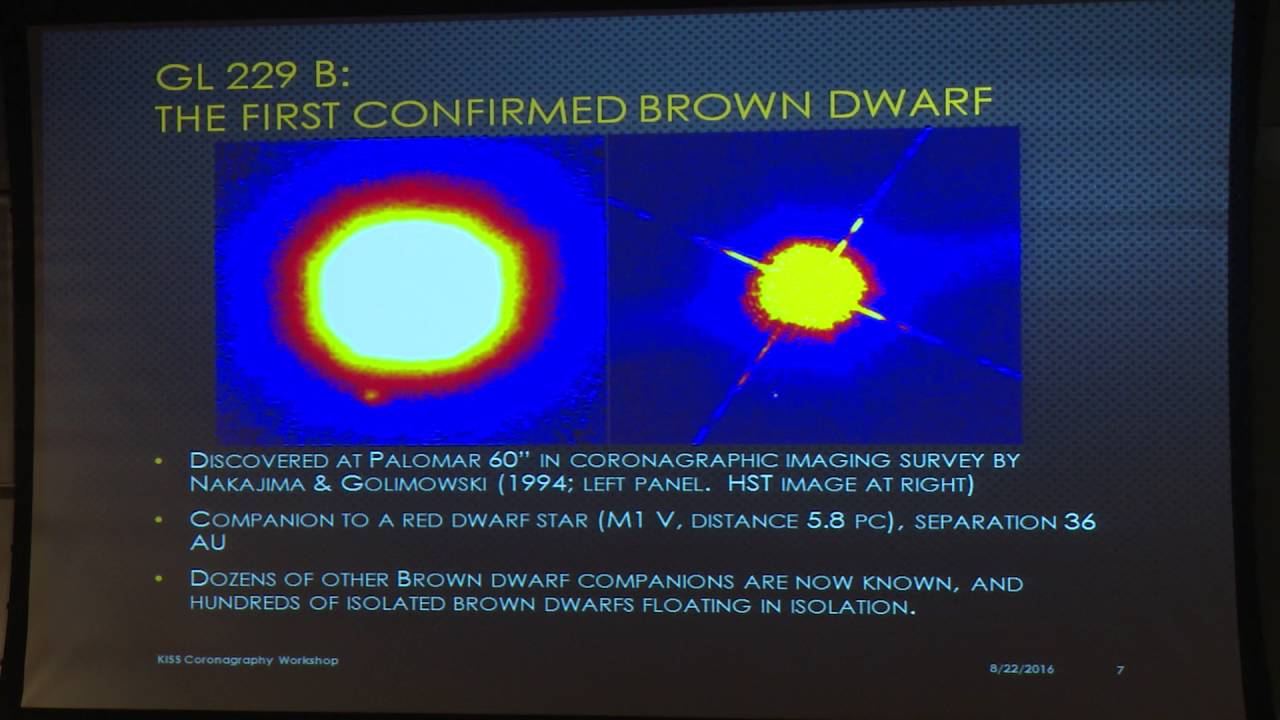
| Karl Stapelfeldt | JPL | Exoplanet Direct Imaging Science (13.2 MB .pdf) (video) |
| Jared Males | University of Arizona | Exoplanet High Contrast Imaging Technologies Ground (2.7 MB .pdf) (video) |
| Eric Cady | JPL | Exoplanet High Contrast Imaging: Space (2.5 MB .pdf) |
| Rob Fergus | NYU | Machine Learning for Astronomy (4.6 MB .pdf) (video) |
| Vanessa Bailey | Stanford | AO Telemetry and Performance (1.0 MB .pdf) |
| Michael Bottom | JPL | Focal plane wavefront sensing and companion detection using phase-shifting interferometry (12.9 MB .pdf) |
| J. B. Breckinridge | Caltech/University of Arizona | Physical optics of image formation coronagraphs: The Point Spread Function (5.4 MB .pdf) |
| Eric Cady | JPL | Exoplanet High Contrast Imaging: Space (2.5 MB .pdf) |
| Christian Delacroix | Cornell University | Machine Learning for (2.2 MB .pdf) |
| Rob Fergus | NYU | Machine Learning for (4.6 MB .pdf) |
| Richard A. Frazin | University of Michigan | Millisecond Exposures in Ground-Based Exoplanet Imaging (1.5 MB .pdf) |
| Carlos Gomez Gonzalez | University of Liege | Post Processing For High-Contrast Imaging (3.4 MB .pdf) |
| Rebecca Jensen-Clem | Caltech | Signal Detection Review (7.1 MB .pdf) |
| Jared Males | University of Arizona | Exoplanet High Contrast Imaging Technologies Ground (2.7 MB .pdf) (1.3 MB .pdf) |
| Ben Mazin | UCSB | MKIDs for Exoplanet (6.8 MB .pdf) |
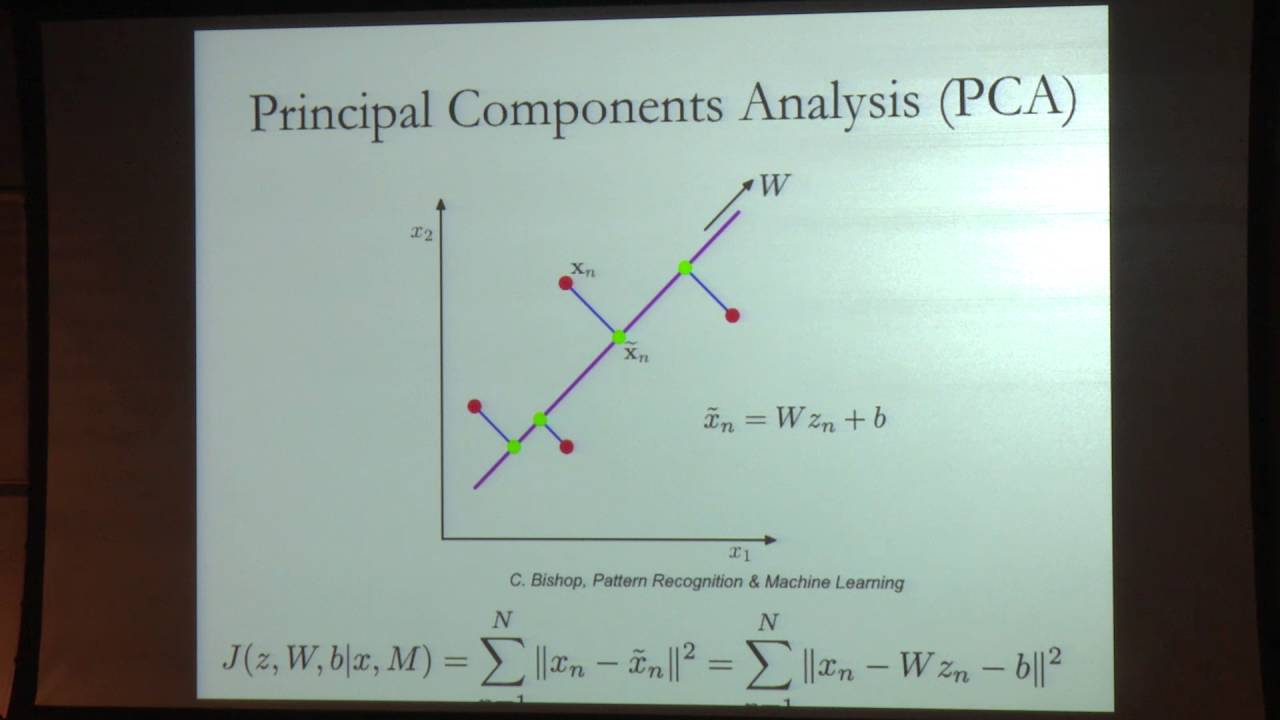
| Laurent Pueyo | Space Telescope Science Institute | PCA data analysis (10.4 MB .pdf) |
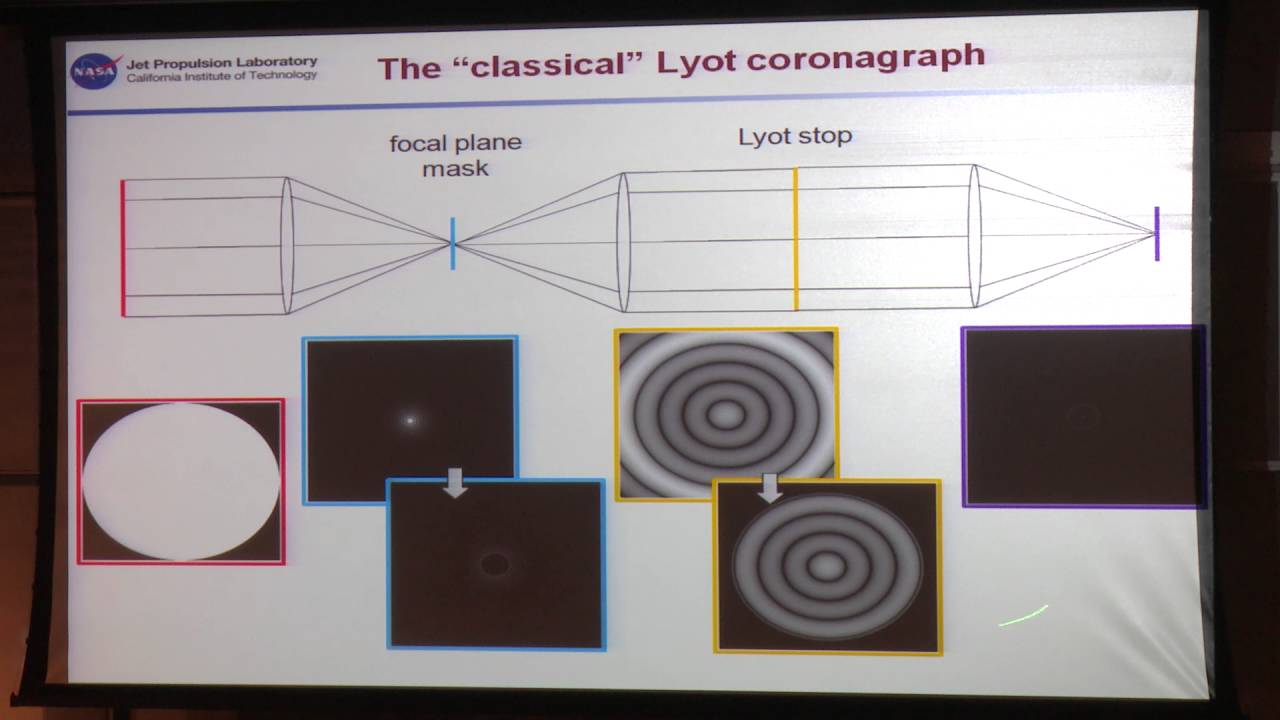
| Garreth Ruane | Caltech | Coronagraph Design Considerations (14.7 MB .pdf) |
| Karl Stapelfeldt | JPL | Overview of Exoplanet Direct Imaging Science (13.2 MB .pdf) |
| J. Kent Wallace | JPL | ZWFS Update (2.69 MB .pdf) |
| Ji Wang | Caltech | Reducing AO-Fed High (1.0 MB .pdf) |