KECK INSTITUTE FOR SPACE STUDIES


Workshop: Next Frontiers in the Investigation of Extraterrestrial Organics

December 1 - 4, 2025
California Institute of Technology - Pasadena, CA 91125

Workshop Overview:

The study of the organic inventory of planetary materials occurs at an intersection of many fields including chemistry, biology, geology, and planetary science. The study will offer a state-of-the-art update of the field, sparking discussions and debates on some of the most pressing unanswered questions surrounding the generation, alteration, and preservation of organic compounds. This workshop aims to promote and inspire future scientific research proposals among participants, and inform the science objectives of sample return and in situ missions outlined in the Decadal report. [e.g., the comet & Ceres sample return and centaur lander missions].

For the first workshop, we will focus on the origin and evolution of organics in the outer solar system through the following areas:

  1. Known organic inventory in meteorites and on Earth environments, including biotic processes. Location and forms of organic matter on different planetary bodies. Key questions will include:
    • What types (chemistry, isotopes, speciation) and in what abundance are organics expected in these environments?
    • How are the organics cycled within the biosphere and interior, and influenced by chemistry and biology?
    • Are organics created or destroyed via impacts or irradiation?
  2. Current state of knowledge about abiotic / prebiotic reaction sequences could occur on and in planetary bodies. Key questions will include:
    • What are the known limits to these prebiotic reactions based on the environment?
    • What conditions are under-explored experimentally and require modeling?
  3. Effects of mineralogy (e.g., Fe and other elements with variable oxidation states), including chloride and carbonate salts, temperature, pressure, and Water:Rock ratios on the formation of new organics, and their subsequent evolution. Key questions will include:
    • How well-characterized is organic matter in these complex, variable environments and where are they inadequately studied?
  4. The relation between carbon-bearing gases such as CO2 and CH4, and organic matter. Key questions will include:
    • Which came first - soluble insoluble organic matter, and how are they related to the CO2 and CH4 gases in the system?
    • What does supercritical CO2 and water do to the pathways for organic evolution?
  5. Instrumentation developments. Key questions will include:
    • What remote sensing and in situ instrumentation developments are required to better address the knowledge gaps and scientific questions (1-4)?
    • What kind of Earth-based analytical facilities would we want or be developed on a decade or 2-decade timescale to study extraterrestrial samples in storage?


Monday, December 1, 2025
Chen 100 Lecture Hall - Caltech

Short Course: Next Frontiers in the Investigation of Extraterrestrial Organics

Time
Event
Speaker
8:15 - 8:45

Coffee and Refreshments

8:45 - 9:00

Logistics / Introduction

Harriet Brettle

Team Leads

9:00 - 9:45

Short Course Lecture #1

Meteorites, Asteroids, and Sample Science (video) (.pdf slides)

Dionysis Foustoukos
9:45 - 10:30

Short Course Lecture #2

Abiotic / Prebiotic Organic Synthesis (video) (.pdf slides)

Laurie Barge
10:30 - 11:00 Break
11:00 - 11:45

Short Course Lecture #3

Cycling of Organic Molecules (video) (.pdf slides)

Kirt Robinson
11:45 - 12:30

Short Course Lecture #4

Organics Detected on Spaceflight Missions (video) (.pdf slides)

Marc Neveu
12:30 - 1:30 Short Course Ends: Informal Lunch is provided

Invitation-Only Workshop Begins
Keck Center - Think Tank, Room 155

1:30 - 1:45 Walk to Keck Center, pick up badge and welcome packet, find seat in the Think Tank
1:45 - 2:30 Workshop Logistics and Introduction to KISS

Harriet Brettle

2:30 - 3:00 Participant Introductions Harriet Brettle
3:00 - 3:30 Study Vision and Goals - including the key pillars for the two study weeks Team Leads
3:30 -4:00 Break
4:00 - 5:00 Finalise study vision via plenary

Team Leads

5:00 - 5:30

Lightning Talks

  1. Glycine Partitioning into Halite During Crystallization from Simuluant Brines
  2. Nate Reed Research Update
  3. Formation pathways of amino acids in the Solar System
  4. Core metamorphism controls dynamic habitability of Ceres
  5. Tracing life-essential molecules across planets and deep time: Mars, meteorites, and fossils

Lucas Reynoso

Nate Reed

Ophélie McIntosh

Samuel Courville

YuanYuan He


5:30 - 6:00 Pack up and walk to dinner

All

6:00 Dinner at a local restaurant in Pasadena

Tuesday, December 2, 2025

Keck Center - Think Tank, Room 155

Time
Event
Speaker
8:00 - 8:30 Institute Opens - FREE THINK TIME
8:30 - 9:00 Coffee and Refreshments at Keck Center
9:00 - 9:15 Logistics and Team Lead Goals for the Day

Harriet Brettle and Team Leads

9:15 - 10:00 Plenary discussion for topic 1: Abiotic Sources Jessica Weber
10:00 - 10:30 Break
10:30 - 10:45 Introduction to Breakout Groups and Topics Harriet Brettle and Study Leads
10:45 - 11:45

Breakout Session 1: What types and in what abundance are there organics in these environments? IOM vs SOM? What cycles are influenced by biology?

1) meteorites

2) earth / planet crust organics / preservation

3) earth / planet mantle processing of organics

4) atmosphere reactivity

Groups
11:45 - 12:30

Breakout Session 1: Second Rotation

Groups
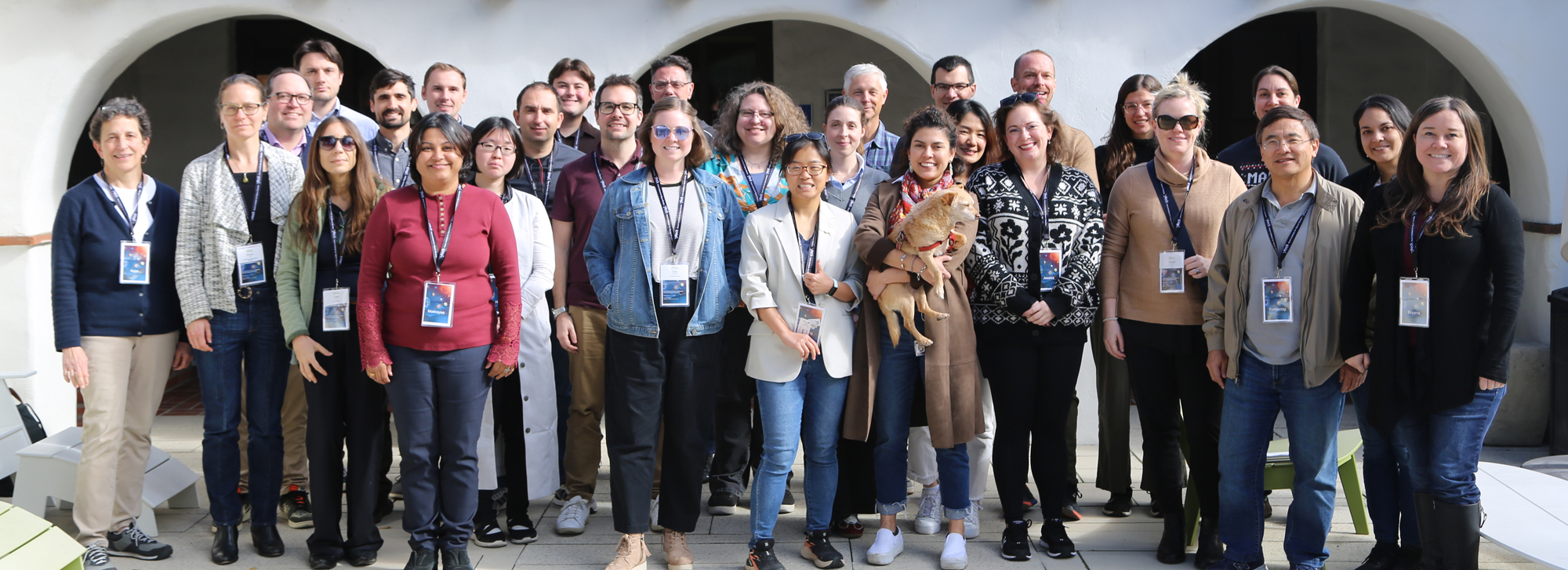
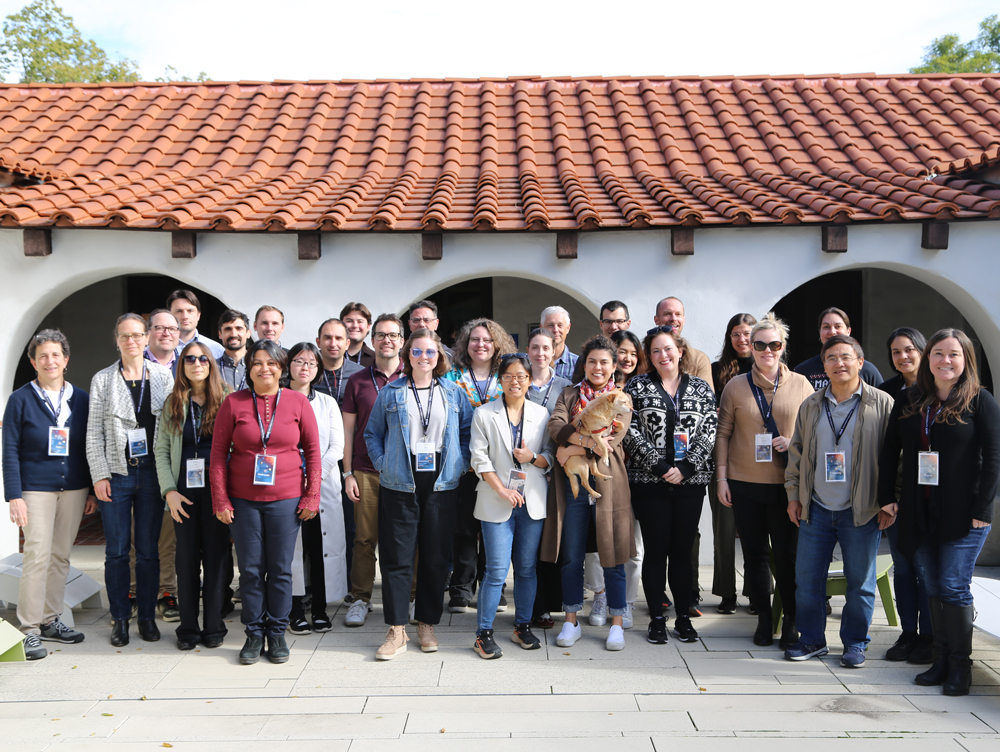
12:30 - 2:00 Group Picture and Lunch on your own
2:00 - 2:40

Report outs from breakout groups (10 mins each)

Groups
2:40 - 3:10 Plenary Discussion and Individual Writing Time

All

3:10 - 3:30 Lightning Talks
  1. Chemistry of thioacetate in the presence of sulfide
  2. An Update from the KISS Sample Return Study
  3. New techniques to analyze volatile organics from very small samples

Haruka Nakagawa

Amy Hofmann

Yongsong Huang

3:30 - 4:00 Break
4:00 - 5:00

Breakout Session 2: What are the known limits to these prebiotic reactions based on the environment? How does this impact the ratio of products? What conditions are under explored?

1) known prebiotic reactions under crust

2) known prebiotic reactions in mantle

3) atmospheric prebiotic reactions

Groups
5:00 - 5:30 Breakout Session 2: Second Rotation Groups
5:30 - 7:30

POSTER SESSION and Informal dinner at the Keck Center

(dinner starts at 6:30 pm)


Wednesday, December 3, 2025

Keck Center - Think Tank, Room 155

Time
Event
Speaker
8:00 - 8:30 Institute Opens - FREE THINK TIME
8:30 - 9:00 Coffee and Refreshments at Keck Center
9:00 - 9:15 Logistics and Team Lead Goals for the Day

Harriet Brettle and Team Leads

9:15 - 9:45 Report Outs from Breakout Groups (10 mins each) Groups
9:45 - 10:15 Group Pulse:"Taking Away" & "Want to Accomplish Yet"

Harriet Brettle

10:15 - 11:00

Plenary Discussion: Next Frontiers, Key Challenges & Report Structure

All

11:00 - 11:30 Break
11:30 - 12:15 Plenary Discussion: Special Conditions Maitrayee Bose
12:15 - 12:30 Selection of breakout groups All
12:30 - 2:00  Lunch at the Keck Center
2:00 - 3:00

Breakout Session 3: Special conditions - how well characterized is organic matter in these environments and where are the holes? (i) What does supercritical CO2 and water do to the pathways for organic evolution? (ii) Which came first - soluble organic matter or insoluble organic matter?

1) Salty conditions in the outer solar system
2) WR ratios
3) atmospheric conditions
4) P/T conditions

All
3:00 - 4:00

Breakout Session 3: Second Rotation

Groups
4:00 - 4:30 Break
4:30 - 5:15 Report outs from breakout groups (10 mins each) and plenary discussion Groups
5:15 - 5:30

Lightning Talks

1. Soot Lines

2. Cloud Facilities at Caltech and JPL

Jenny Bergner

Bryana Henderson

5:30 Walk over to the Athenaeum All
6:00

Closing Dinner at the Athenaeum


Thursday, December 4, 2025

Keck Center - Think Tank, Room 155

Time
Event
Speaker
8:00 - 8:30

Institute Opens - FREE THINK TIME

8:30 - 9:00

Coffee and Refreshments at Keck Center

9:00 - 9:15 Logistics and Team Lead Goals for the Day

Harriet Brettle and Team Leads

9:15 - 10:00

Breakout Session 4:

1. In situ detection

2. Spectroscopy

3. Sample handling

Groups

10:00 - 10:30

Breakout Session 4: Second Rotation

Groups
10:30 - 11:00 Break
11:00 - 11:45 Report outs from breakout groups (15 mins each) All
11:45 - 12:30

KISS Outputs - Final Report and Stakeholders

Study Leads
12:30 - 2:00

Lunch at the Keck Center

2:00 - 2:30 FREE THINK TIME (individual, or self organizing small groups) All
2:30 - 3:15 Breakout Groups - Report Drafting Groups
3:15 - 3:30 Plenary Group Discussion: Path Forward for Collaboration, Discussion on future projects Jessica Weber
3:30 - 4:00

Break

4:00 - 4:30 Open Discussion of Breakout Group Recommendations and Path Forward All
4:30 - 5:00 Workshop Closeout Harriet Brettle
5:00

Institute Closes


Workshop Participants:

  • Laurie Barge - JPL
  • Jennifer Bergner - University of California, Berkeley
  • Maitrayee Bose - Arizona State University
  • Eloi Camprubi - University of Texas Rio Grande Valley
  • Julie Castillo - JPL
  • Samuel Courville - Arizona State University
  • Ellen Czaplinski - Honeybee Robotics
  • Dionysis Foustoukos - Carnegie Institution for Science
  • Kate Freeman - Pennsylvania State University
  • Yuanyuan He - Caltech
  • Bryana Henderson - JPL
  • Amy Hofmann - JPL
  • Yongsong Huang - Brown University
  • Kristin Johnson-Finn - Rensselaer Polytechnic Institute
  • Christopher Junium - Syracuse University
  • Susan Lang - Woods Hole Oceanographic Institution
  • Shawn McGlynn - Institute of Science Tokyo
  • Ophélie Mcintosh - Pennsylvania State University
  • Alexander Meshoulam - Caltech
  • Haruka Nakagawa - Institute of Science Tokyo
  • Marc Neveu - University of Maryland / NASA Goddard Space Flight Center
  • Nathan Reed - University of Colorado Boulder & Rensselaer Polytechnic Institute
  • Lucas Reynoso - Arizona State University
  • Kirtland Robinson - Arizona State University
  • Laura Rodriguez - Lunar and Planetary Institute
  • Alex Sessions - Caltech
  • Julia Tejada - Caltech
  • Jessica Weber - JPL
  • Xinting Yu - University of Texas at San Antonio