KECK INSTITUTE FOR SPACE STUDIES


Workshop: Next Frontiers in the Investigation of Extraterrestrial Organics - Part II

June 1 - 4, 2026
California Institute of Technology - Pasadena, CA 91125

Map

Workshop Overview:

This KISS study of the organic inventory of planetary materials occurs at an intersection of many fields including chemistry, biology, geology, and planetary science. The study will offer a state-of-the-art update of the field, sparking discussions and debates on some of the most pressing unanswered questions surrounding the generation, alteration, and preservation of organic compounds. The first study week focused on the outer solar system. The second week of this KISS Study aims to promote and inspire future scientific research proposals among participants, and inform the science objectives of sample return and in situ missions outlined in the Decadal report focusing on the inner solar system.

For the second study week, we will focus on the origin and evolution of organics in the inner solar system through the following areas:

  1. Current understanding of organics in the inner solar system. Location and forms of organic matter on different planetary bodies. Key questions will include:
    • What have Mars missions informed us about organics? What are the discrepancies with orbiter / remote data?
    • What do we know about organics on the moon?
    • What is known about organics on Venus and Mercury?
  2. Special conditions in the inner solar system. Key questions will include:
    • What are key conditions for the inner solar system and what environmental conditions will influence organic detection
    • How well-characterized is organic matter in these complex, variable environments and where are they inadequately studied?
  3. Instrumentation developments. Key questions will include:
    • What developments can we make to organic detection instruments?
    • What kind of Earth-based analytical facilities would we want or be developed on a decade or 2-decade timescale to study extraterrestrial samples in storage?
  4. Mission Concepts. Key questions will include:
    • How can ongoing missions connect to mission concepts?
    • How can crewed missions connect with organic analysis without contamination?
    • Are there measurements that are critical prior to crewed missions?
    • Can we leverage CLIPS/commercial missions?

The preliminary study program schedule is available in .pdf here.


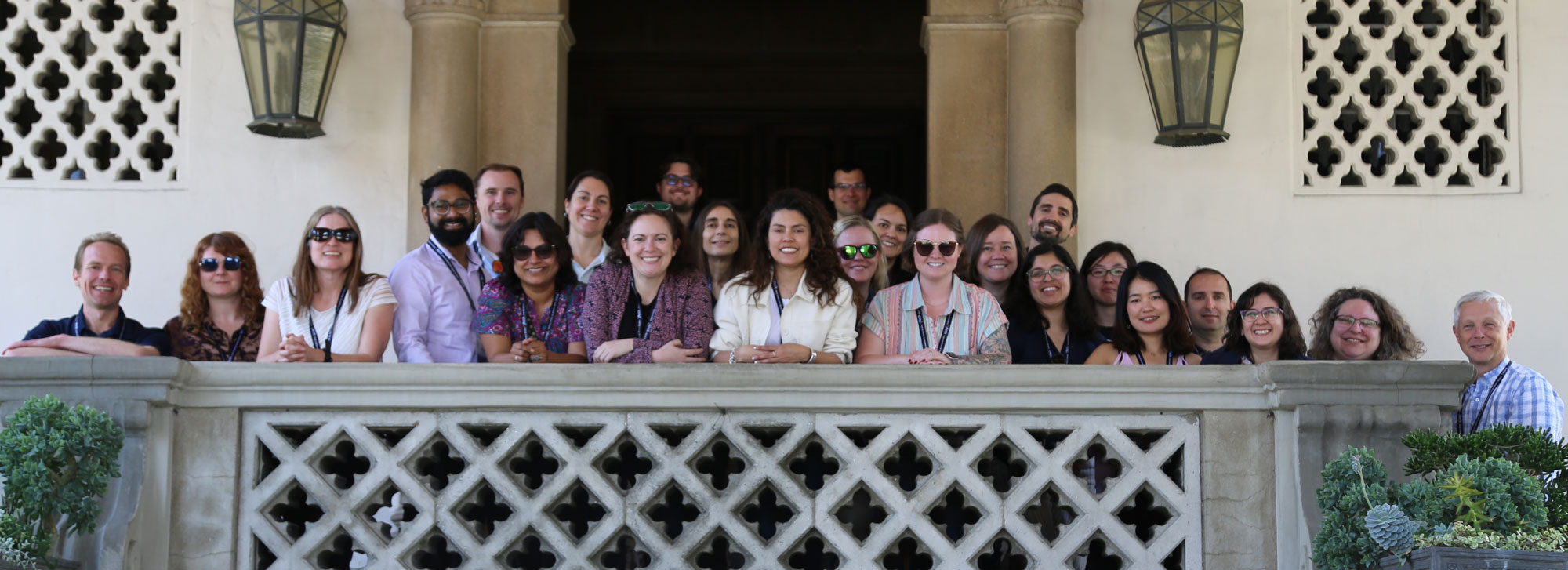
Workshop Participants:

  • Laurie Barge - JPL
  • Maitrayee Bose - Arizona State University
  • Julie Castillo - JPL/Caltech
  • Lu Chou - NASA Goddard Space Flight Center
  • Samuel Courville - Arizona State University
  • Ellen Czaplinski - Honeybee Robotics
  • Elisabeth Hausrath - University of Nevada, Las Vegas
  • Yuanyuan He - Caltech
  • Bryana Henderson - JPL
  • Amy Hofmann - JPL
  • Jennifer Jackson - Caltech
  • Kristin Johnson-Finn - Rensselaer Polytechnic Institute
  • Christopher Junium - Syracuse University
  • Hemani Kalucha - NASA Goddard Space Flight Center
  • Shawn McGlynn - Institute of Science Tokyo
  • Alexander Meshoulam - Caltech
  • Kaushik Mitra - The University of Texas at San Antonio
  • Haruka Nakagawa - University of Groningen
  • Marc Neveu - University of Maryland / NASA Goddard Space Flight Center
  • Sara Port - The University of Texas at San Antonio
  • Lucas Reynoso - Arizona State University
  • Kirtland Robinson - Arizona State University
  • Laura Rodriguez - Lunar and Planetary Institute
  • Alex Sessions - Caltech
  • Bonnie Teece - Cornell University
  • Julia Tejada - Caltech
  • Jessica Weber - JPL

Lodging for out-of-town attendees

There are a number of hotels that are close to the Caltech campus where we have a negotiated rate. (Please note that this negotiated rate does not guarantee you the lowest rate as there may be internet specials or AAA rates that may be better.)

Please note that with enough notice, you can reserve rooms for attendees at the Athenaeum, which has been recognized as a Platinum Club of America. Newly refurbished, it is conveniently located on the Caltech Campus. Contact Janet Seid if you would like to check the availability of this option.


Directions to the Keck Center

For information on arriving to the Keck Center, visit our Maps & Directions page.


Parking (for Visitors and for JPL Personnel)

For Visitors: From the Arroyo Parkway, turn right (east) on Del Mar Avenue. Proceed approximately one and a quarter miles. The Caltech campus will be on your right. Turn right (south) onto Wilson Avenue. Turn right into the North Wilson Structure and park in an unmarked spot. Buy a parking permit from the kiosk located inside the North Wilson Structure or request one ahead of time from KISS.

For JPL Personnel: JPLers may use their JPL hang tag for parking or request a special parking hangtag from the JPL parking office. Employees who do not have on-Lab parking privileges can obtain a hang tag created for this purpose from JPL parking coordinator Robert Kennedy (818-354-4586, Building 310-108B, 9/80 schedule). Please park in an unmarked spot in the North Wilson Structure located on Wilson Avenue.


Maps and General Information on Pasadena


Visa Requirements

For Visa requirement information and travel to the United States please visit the website of the U.S. Department of State.